⚇ The Short Answer
London business meetings are dense, time-precise and forgive nothing. Train delays, signal failures, no phone signal in tunnels, rain on a suit en route to a pitch — each one costs more than the executive car that would have prevented them. Ride-share apps add a layer of problems senior firms cannot accept: algorithmic routing instead of local knowledge, no NDA on the driver, and a phone app that logs every pickup and drop-off. For VIP client arrivals, multi-meeting days, confidential calls and any business journey where being on time and being unobserved are the whole point, pre-booked chauffeured is the standard.
The 9am board meeting. The 11am pitch to a Mayfair fund. The 3pm client at Canary Wharf followed by a 6:30pm flight from City Airport. London business travel is dense, time-precise, and unforgiving of transport optimism.
The single biggest predictor of a successful business day is what time you arrived. Everything that follows — the negotiation, the trust, the impression — flows from the door of the meeting having opened at the time it was supposed to. And there are three things actively working against that, every weekday morning in London, that the senior leadership of most firms has never sat down and quantified.
Section 01 · The Algorithm1. Why ride-share apps route by map, not by London
Here is the sentence Uber and the ride-share apps do not put in their marketing: an algorithm picks a route from a map. A London chauffeur picks a route from twenty years of knowing that map.
On paper, ride-share routing engines optimise for estimated arrival time using current GPS traffic data. In practice, that is a far weaker thing than it sounds. An algorithm sees that "the most direct route from Mayfair to Canary Wharf at 4:45pm is via Lower Thames Street, estimated 38 minutes." A chauffeur who drives those roads every week of the year knows the estimate is fantasy — the Limehouse Link bleeds back at school pickup, the Aldgate gyratory chokes by 5pm, and the actual fastest route at this exact time of day is two miles longer but ten minutes shorter through the south of the river.
⚠ Algorithmic ride-share
The route the map likes
Optimises for: the estimated drive time the data thinks it sees.
Doesn't know: that Park Lane at 5:30pm is a parking lot every Thursday. That the Embankment closes for events more weekends than not. That construction on the Aldwych one-way has added 14 minutes to every cross-Strand journey since March.
Driver: incentivised by ride volume, not by your arrival time. May or may not be following the suggested route. Almost certainly not from London.
✓ Local chauffeur
The route the city knows
Optimises for: the actual fastest journey at this exact time, on this exact day, with this week's road closures factored in.
Knows: every cut-through Soho. The pattern of when Hyde Park Corner becomes unusable. Which embankment to take. When the bus lanes are timed. Where the temporary lights are this month.
Driver: paid by the journey, vetted, drives London every day, professionally trained to get you there on time.
The gap between these two routings — across one cross-London business day with three meetings — is rarely less than 45 minutes. Forty-five minutes that nobody invoiced.
An algorithm picks the shortest line on a map. A chauffeur picks the fastest one through 4:45pm on a Thursday in May. The first is a calculation. The second is a job.
Section 02 · The Maths2. What an executive hour actually costs
Here is the number nobody on the operations side wants to put on a slide.
At FTSE 100 compensation levels, total compensation works out to roughly £2,000 per working hour. At senior partner or HNI level, the band is £500–£1,500 per hour. At GP / investment director level, it is £300–£700 per hour. These are not theoretical numbers — they are the implicit value the firm places on that person's time, reflected in everything from compensation to billing rate to how dearly the calendar is guarded.
Now do the maths on a typical London business day done badly.
| What was lost | Time | Cost @ £1,000/hr |
|---|
| Algorithm took the wrong cross-London route at 4:45pm | +22 min | £367 |
| Tube signal failure on the morning leg | +30 min | £500 |
| No usable phone signal in tunnels — email backlog | 40 min unused | £667 |
| Confidential call could not be taken on a train — meeting rescheduled | variable | £500–£2,000 |
| Arrived to a pitch wet and crumpled — first impression spent | — | incalculable |
| Total productivity bleed · one day | ~92 min | £2,000+ |
The cost of a full-day executive chauffeur in London is £420–£540. It is, in measurable executive-hour terms, the cheapest line on the business-travel budget — and the only one that systematically gets cut.
The business case for an executive driver is not comfort. It is that the time between meetings stops being lost.
Section 03 · The Priority Nobody Talks About3. GDPR, NDAs, and what gets overheard in the back seat
For senior corporate, celebrity, and high-net-worth clients, there is a priority that ranks above timing, comfort, and cost — and it almost never makes it into a marketing brochure. The journey must not generate a data trail. The driver must not be a witness who can speak. The car must be a sealed room.
Ride-share apps fail this test by design. Every pickup address, every drop-off, every wait time, every passenger phone number is logged in an app, transmitted across third-party servers, retained according to that company's data-retention policy, and — in the case of one US-based ride-share — has been the subject of significant data-protection enforcement action by European regulators. A celebrity's home address, an executive's regular Tuesday meeting location, a hedge fund partner's pattern of pre-deal travel — all of it is data, and ride-share apps treat it as data they own.
For our HNI, celebrity, talent management and senior corporate clients, Rushxo operates on a different basis from the ground up.
⚇ The Rushxo confidentiality standard
- GDPR-first booking architecture. Passenger details, addresses, and journey records are stored only for as long as legally required, accessible only to the operations team handling the booking, and deletable on request under UK GDPR Article 17 (right to erasure).
- Driver NDAs as standard for HNI and celebrity bookings. Signed in advance, enforceable in English courts, covering identity of passenger, route, conversations overheard, and any third parties present in the vehicle.
- Enhanced DBS-checked drivers. Not gig-economy. Vetted by Rushxo, employed or contracted through licensed PHV operators with ongoing compliance obligations.
- Discretion-trained. Drivers do not initiate conversation, do not retain visible phone activity in the cabin, and do not photograph the vehicle or its occupants under any circumstance.
- No social media presence relating to clients. Mentioning a Rushxo passenger on any public platform is a contractual termination event for the driver.
- Privacy partition options on V-Class. Glass partition for sensitive calls. The conversation in the back stays in the back.
- No third-party data sharing. Journey data is not sold, syndicated, or used for advertising. Period.
- Discreet pickup protocols. No name boards in arrivals for high-profile passengers. Alternative pickup points coordinated by WhatsApp for paparazzi avoidance. Vehicle make/model selectable to avoid pattern-matching.
For senior management on M&A timelines, founders on funding rounds, celebrities on press tours, and HNI families with security considerations — this is not an upgrade, it is the baseline. The reason private chauffeur services exist as a category is precisely so that the most sensitive hours of the week happen in a car where the driver works for the principal, not for an app.
Section 044. What else actually goes wrong with business public transport
- Train delays. Even "reliable" lines hit 8–12% delay rates in winter. A 9am pitch with a 7:48 train builds in zero margin.
- Tube signal failures. Not predictable. 20–60 minutes lost when they happen. They happen.
- Wardrobe. Suit + rain + Tube humidity = arrival at a presentation looking less than crisp.
- Phone signal. Tube tunnels = no email, no calls, no messages. Forty minutes you cannot use, on a day where every minute was priced.
- Confidentiality. A call from a moving train is overheard by definition. Material non-public information cannot be discussed in carriage 4.
- Meeting-to-meeting transit. Mayfair to Canary Wharf is 50 minutes on the Jubilee Line. Or 25 minutes by car, on a chauffeur's preferred route.
Section 055. The scenarios
01 · Heathrow morning
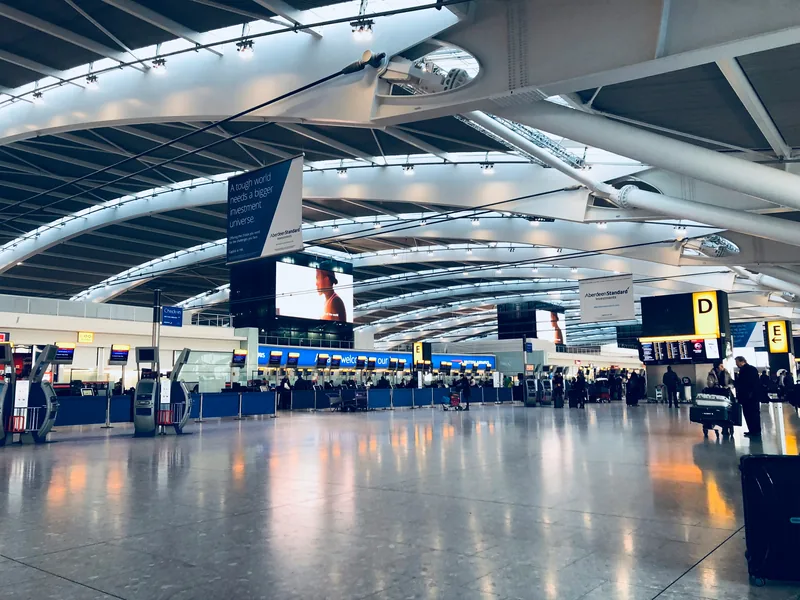
Heathrow to City for a 9am board meeting
Flight lands 06:35 from New York. Board meeting at 9:00am at a Threadneedle Street office. Suit in the carry-on, deck on the laptop, one shot to be on time and presentable.
Public Transport
Elizabeth Line to Liverpool Street, walk. Theoretically 50 min. Practically 60–80 min including baggage, ticket-machine queue, walk. Suit creased.
Pre-Booked Rushxo
Driver at arrivals 30 min after wheels-down. Direct to office. WiFi in the car. 45–60 min including suit change in the back if needed. Email cleared en route.
Verdict. Heathrow-to-City morning is the single highest-value pre-booked ride in the business calendar. The car pays for itself before breakfast.
02 · Mayfair → Canary Wharf → Marylebone
Cross-London meetings, 30-minute margin
11am Mayfair, 2:30pm Canary Wharf, 4pm back to Mayfair, 6pm dinner in Marylebone. Four meetings, three transfers, three windows where the day can fall apart.
Public Transport / Uber
Jubilee Line works in theory. Uber works in theory. In practice, signal failures, escalator outages, lunchtime crowds, and algorithmic routing through Hyde Park Corner all consume the margin between meetings.
Pre-Booked Rushxo
Booked car waits between meetings. Driver does the navigation, the parking and the timing on London's actual fastest routes. Client calls happen in the back seat, on the partition glass, on a private line.
Verdict. Multi-meeting days are where pre-booked stops being a transport choice and starts being a productivity tool.
03 · Client at hotel
VIP client arriving for a single meeting
Senior client flies in from Frankfurt for a single morning meeting and leaves the same evening. Your firm's job is to make the day feel effortless and unobserved.
Public Transport / Uber
Suggest they take the Tube. Suggest they take an Uber. Hope the surge price isn't 3.2x. Hope the driver speaks the client's language. Hope no journey data winds up anywhere unfortunate.
Pre-Booked Rushxo
Driver with discreet name card at arrivals. To hotel. To office. To lunch. Back to airport. Single driver across the day. Signed NDA. Fixed fare confirmed by your office. No app trail.
Verdict. The day a client experiences as effortless and discreet is the day they remember — and the day they sign.
04 · Confidential conversation
Phone calls you cannot take on a train — or in an Uber
Acquisition discussion. Hiring conversation. Board-level briefing. Material non-public information that cannot be overheard by a passenger, a driver, or a phone app retaining the call's location.
Public Transport / Uber
Not realistic. The train is too public, the Uber driver is not bound by any non-disclosure obligation, and the call's start point and end point are logged in an app you do not control.
Pre-Booked Rushxo
Quiet executive saloon. Driver under NDA. Privacy partition on V-Class. Call happens in transit, in private, with no third-party app retaining the journey data.
Verdict. The reason senior executives have car services is not luxury — it is that the most sensitive hour of the week needs to happen somewhere it will not be overheard or logged.
Section 066. The cost in context
| Service | Cost | What it actually buys |
|---|
| Tube cross-London (5 hops) | ~£20 | Baseline. 50 min on the line. No calls, no email, no NDA. |
| Uber, peak, cross-London | £35–£75 | Algorithmic route. Driver not vetted by you. Journey data retained by app. |
| 4-hour Rushxo executive car with driver | £220–£280 | ~90 min saved. NDA. Vetted driver. Email cleared en route. |
| Full-day Rushxo (8 hours) | £420–£540 | ~180 min saved. Calls taken in privacy. Calendar protected. |
At £1,000-an-hour executive value, three hours saved across a day is £3,000 of reclaimed productivity at a cost of £500. Six times return, before counting the qualitative gains — the on-time arrivals, the dry suit, the call you could take in private, the client who didn't know which hotel you were taking them to until the car door opened there.
Section 077. Corporate & HNI accounts
Rushxo runs corporate accounts for firms that travel regularly, and private accounts for HNI, family-office, talent-management and celebrity clients:
- Centralised billing — single monthly invoice, VAT receipt per ride
- Multiple authorised users on one account with permission tiers
- Dedicated account manager for last-minute and out-of-hours bookings
- Standing arrangements — recurring weekly journeys, school runs, regular client visits
- Discretion-trained drivers, NDAs as standard for HNI and celebrity bookings
- GDPR-compliant data handling with right-to-erasure on request
- Discreet pickup protocols — no name boards, alternative pickup points, paparazzi-aware
- Security-coordinated journeys for clients with close protection teams
Request a corporate or HNI account at corporate@rushxo.com or via WhatsApp. Reference call available on request from existing senior corporate clients (subject to those clients' own confidentiality preferences).
⚇ The Rushxo Promise
Three hours saved. One suit still pressed. Zero data trail.
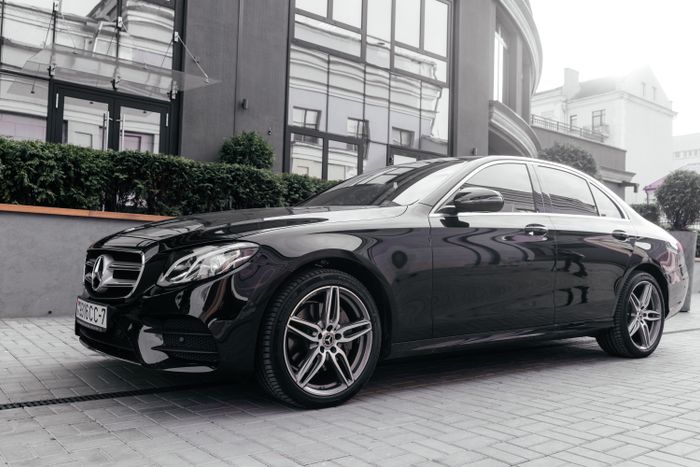
Pre-booked executive transfers across London and the home counties. Executive saloons (E-Class, 5 Series) and V-Class. Corporate and HNI accounts with centralised billing. Standing arrangements for regular journeys. Discretion-trained drivers, enhanced DBS, NDAs as standard for HNI and celebrity bookings. GDPR-compliant data handling. Email corporate@rushxo.com or WhatsApp +44 7466 237870.