⚇ The Short Answer
UK law requires children under 135cm in age-appropriate car seats in pre-booked private hire — not provided in black cabs, not provided on trains, definitely not provided on the Tube. Pushchairs don't fold while a baby is in them. Most deep Tube lines have no air conditioning. Sunday engineering closures eat your day. And no parent in human history has enjoyed feeding a baby in a Northern Line carriage at peak.
For any family journey involving an airport, an evening out, a feed-time, or a Sunday day trip — pre-booked is not a luxury. It is dignity for everyone in the car.
Anyone who has tried to fold a pushchair on a moving Tube train while holding a baby with one arm and a coffee with the other knows there is nothing on Earth that compares with the specific despair of family travel by public transport.
This isn't about preference. It's about logistics — and about the social experience that comes with those logistics. Children come with kit. The kit doesn't fit on a Tube. The Tube doesn't have AC. The strangers in the carriage have opinions. And no amount of optimism makes a 7-year-old enjoy a Sunday afternoon engineering closure on the District line at 32 degrees.
Section 011. The five practical realities of family transport
- Pushchairs. Modern travel pushchairs (Bugaboo, Yoyo, Babyzen) fold smaller than ever — but a Tube doorway is narrower still. And they don't fold with a baby in them.
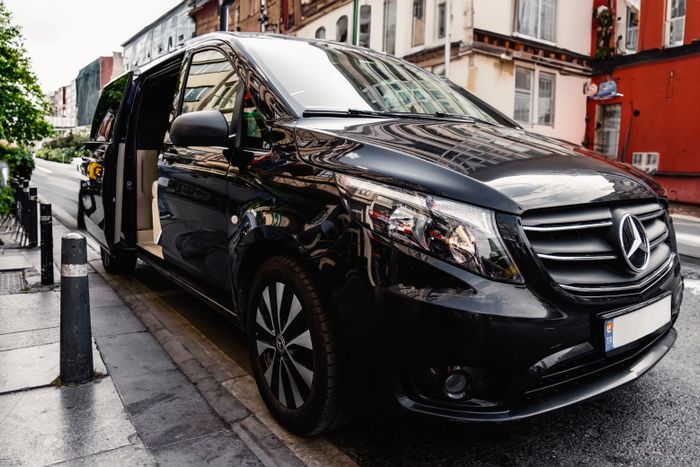
- Car seats. UK law requires children under 135cm in a height-appropriate seat. London black cabs are exempt; minicabs are not. Pre-booked means the seat is already in the car when it arrives.
- Multiple bags. Suitcase + nappy bag + snack stash + spare clothes + favourite-toy-without-which-naps-don't-happen.
- Nap times. A child asleep in a car seat stays asleep. A child standing on a Tube doesn't.
- Toddler legs. A 4-year-old can walk 500m before complaining. Stations average 200m of corridor before you reach the train. Maths is unforgiving, and so is the toddler.
Section 022. The five things nobody warns you about
The practical stuff is what people put in family travel guides. This is the part they leave out.
⚇ Reality 01 · The Heat
38 degrees on the Central Line
The deep Tube lines — Central, Bakerloo, Northern, Piccadilly, Victoria, Waterloo & City — have no air conditioning. They were built into clay 150 years ago and the clay holds heat. Recorded summer carriage temperatures regularly exceed 35°C. This is hotter than the legal limit for transporting livestock. It is the environment you are about to put a six-month-old into.
A flushed, screaming baby on the Central Line in July is not "your baby being difficult." It is a small human responding to heat stress in the only way a six-month-old can.
⚇ Reality 02 · The Stares
The look from the man in the suit
Every parent of a young child in London has had this moment. The toddler is having a meltdown. You have tried every distraction in your arsenal. And across the carriage, a man in a suit — or sometimes a woman in expensive trainers — is looking at you in a way that says, clearly and without speaking it: "Why did you have to bring it on here."
You are not imagining this look. It is a real look. And it is not a judgement that has anything useful to say about you, your child, your parenting, or your right to be in public space. It is, however, exhausting to absorb on top of everything else. The private car is the space where that look does not exist.
⚇ Reality 03 · The Kicking
Small feet, stranger's leg
Toddlers kick. Toddlers throw snacks. Toddlers smear yogurt on the seat. Toddlers kick the seat in front. Toddlers kick the leg of the stranger next to them, which the parent then has to apologise for, while the stranger sighs theatrically, while the toddler — sensing tension — does it again.
None of this is the child's fault. A two-year-old confined to a static seat in a hot crowded space cannot regulate their behaviour the way an adult can. They are doing exactly what a two-year-old is supposed to do. The environment is what's wrong, not the child.
⚇ Reality 04 · The Feed
Feeding a baby in front of forty strangers
Breastfeeding in public is legal in the UK and explicitly protected by the Equality Act. That law does not, unfortunately, change how a new mother feels when a hungry six-week-old has to be fed on a packed Northern Line train, with no privacy, with the eyes of strangers either pointedly looking away or — sometimes worse — pointedly not. Bottle-feeding is not always easier; the heat of a Tube ruins the temperature of formula, and finding somewhere to sit to do it at all is its own challenge.
This is not about whether you "should" feel comfortable feeding in public. Of course you have the right. The point is that many mothers, particularly in the early months, would simply prefer not to do it under forty strangers' gaze on a 35-degree carriage — and a private car offers that choice. A rear-facing seat in a quiet vehicle is a different experience from a Tube bench. Both are legal. One is dignified.
⚇ Reality 05 · The Bag
The exploded nappy bag
You needed a wipe. To get the wipe, you had to open the bag. To open the bag on a moving Tube, you had to put it on your lap. The train lurched. The bag tipped. Three nappies, a tube of Sudocrem, two dummies and a small pot of Calpol are now rolling around the floor of the carriage. The man in the suit (see Reality 02) is watching.
The entire mechanics of caring for a small child — feeding, changing, distracting, comforting — is designed for a private, contained, climate-controlled space. The Tube is the opposite of that space. Every parent who has done it knows the cost.
The Tube is not built for small children. It is built for commuters who hate small children. These are not the same audience. A private car returns the journey to the people who are actually on it.
Section 033. The scenarios where pre-booked wins
01 · Heathrow with a newborn
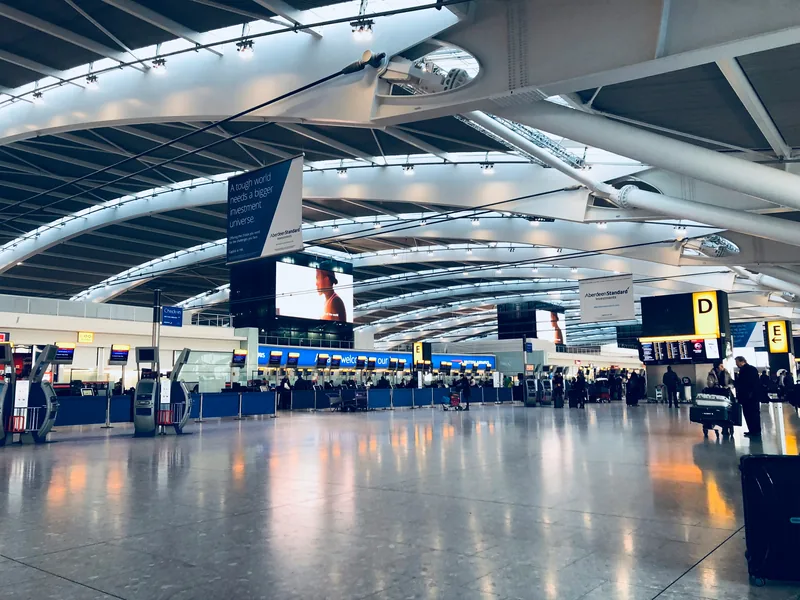
Heathrow → home, baby's first journey
The first journey home from the hospital is rarely the parents' first car ride with a baby. The journey home from a flight — newborn, jetlag, two parents who haven't slept — is its own particular challenge.
Public Transport
Elizabeth Line with a pram is technically step-free at Heathrow and Paddington — but not necessarily at your destination. One uncovered lift change and you're carrying everything down a staircase, baby crying, suit watching.
Pre-Booked Rushxo
Rear-facing infant seat fitted before pickup. Driver helps load pram and bags. Quiet drive home — baby usually sleeps the whole way. Feed in privacy if needed.
Verdict. First-time parents almost universally book a return transfer. It's one of the few transport decisions later parents say they'd repeat.
02 · School run extended
School pickup to airport on flight day
The 3:15pm school run followed by a 6pm flight from Stansted is the most logistically delicate journey in family travel. Two children, school bags, suitcases for the holiday, no time for diversions, no patience left after the run-up.
Public Transport
School to home for bags, home to Stansted Express, change at Liverpool Street with kids and four bags through rush hour commuters. Margin for error: zero.
Pre-Booked Rushxo
Driver collects parent at home, parent collects kids at school, driver does Stansted run direct. Kids snack in the back, watch a tablet. Bags already in the boot from the morning.
Verdict. The single most-booked Friday-evening journey in our family-travel category.
03 · The Sunday closure
The Sunday engineering works trap
London Underground engineering closures happen mostly on Sundays. The journey you carefully planned on Friday is replaced by a rail replacement bus and a 35-minute walk. With three under-8s. In the rain.
Public Transport
TfL updates are good but late. The replacement bus is slow, hot, packed. The bus doesn't have a pushchair-accessible door. You will end up carrying the buggy, with a child in it.
Pre-Booked Rushxo
The car takes the optimised route ignoring closures entirely. The driver knows which Sunday roads are filtered traffic-only. Everyone arrives still on speaking terms.
Verdict. Sundays are by far the worst day for family public transport in London. Pre-booked is a different category of experience.
04 · Theatre, museum, zoo
Day out in London with a tired toddler
The plan was West End matinee then dinner. The reality is one child asleep, one child overstimulated, three coats, two pushchairs, and a hailed taxi at 17:30 in central London on a Saturday — good luck.
Public Transport
The hailing-a-taxi-with-tired-kids ritual is one of the most reliably awful experiences of London weekend tourism. Add rain and it becomes legendary.
Pre-Booked Rushxo
Driver scheduled for collection at venue. Sleeping toddler stays sleeping in the seat they were already strapped into. Pushchair folds, fits, ride home is calm.
Verdict. The collect-from-venue model is what makes pre-booked family travel actually pleasant rather than tolerable.
Section 044. Child seats — the law and the practice
Under UK law, children under 135cm tall (or under 12) must travel in an appropriate car seat in a private hire vehicle. Black cabs are exempt; pre-booked private hire is not.
What this means in practice: a booked Rushxo car arrives with the appropriate seat already fitted. A hailed Uber may or may not have one. A National Rail train doesn't need one (different law) but doesn't provide one either.
Available on request — specify ages and heights when you book, and we confirm the seats in writing before pickup:
- Rear-facing infant carrier (0–12 months)
- Group 1 toddler seat (9 months – 4 years)
- High-back booster (4–10 years)
- Backless booster (8+ years, age and height permitting)
⚇ The Rushxo Promise
Air-conditioned car. Right child seats. A driver who has children of their own.
Pre-booked family transfers with infant, toddler and booster seats fitted before pickup. Air-conditioned, pushchair-friendly vehicles. Drivers experienced with — and patient with — family travel. Specify ages and heights when you book; we confirm the seats in writing before pickup. Feed-friendly journeys, sleeping-toddler-friendly drivers, and zero strangers staring at any of you.