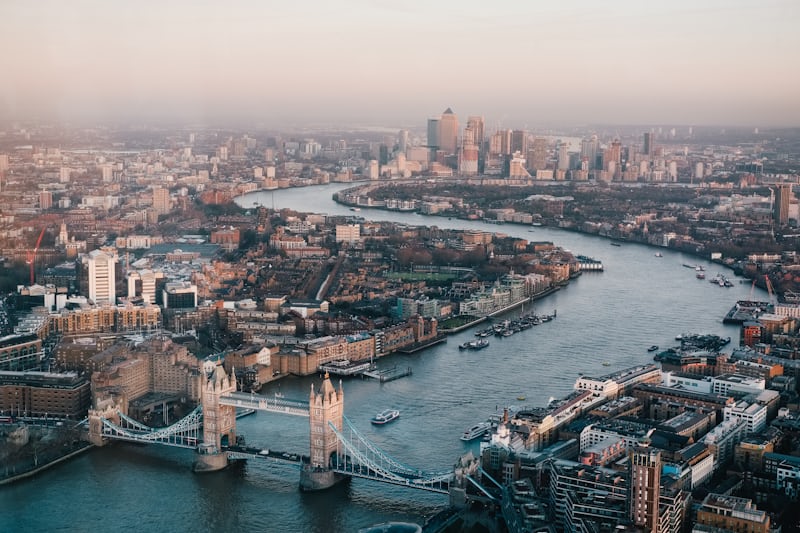
Few cities wear luxury as naturally as London. It is not a place that had to invent its grandeur; it inherited it — from centuries of royal patronage, from an empire's worth of trade in silk, tea, jewels and cloth, from tailors and jewellers and hoteliers who have been perfecting their craft since before most of the world's luxury houses existed. To arrive in London with time and means is to step into a city that has been anticipating you for three hundred years.
This guide is a map to that London — the one of Mayfair boutiques and Michelin kitchens, of five-star suites and members-only rooms, of afternoon tea taken beneath chandeliers and champagne poured as the evening turns. It is written for the traveller who wants the best of it, arranged so that a visit flows: what to see, where to stay, how to plan, and how to move between it all without friction. Where a specific detail — an address, a price, an opening time — matters, we point you to the official source, because in luxury as in everything, the details are the difference, and they change.
In this guide
- Why London leads
- Luxury shopping
- Five-star hotels
- Michelin-star dining
- Luxury afternoon tea
- Wine, champagne & whisky
- Spas & wellness
- Exclusive experiences
- Private members' clubs
- Luxury neighbourhoods
- Airports & private aviation
- Concierge services
- Bicester Village
- Planning your visit
- Getting around in luxury
- Practical information
- Frequently asked questions
Why London leads the luxury world
London's pre-eminence in luxury rests on a rare combination: history and money, tradition and reinvention, all concentrated in a compact, walkable core. The royal presence has shaped the city's idea of quality for centuries — the royal warrant, granted to businesses that supply the Royal Household, remains a mark of distinction on shopfronts from Savile Row to St James's. That heritage gave London its jewellers, its tailors, its wine merchants and its grand hotels, many of which have traded continuously for well over a century.
Consider the lineage. Berry Bros. & Rudd has sold wine from the same St James's shop since 1698. Fortnum & Mason was founded in 1707. The Savile Row tailoring tradition, from which the word "bespoke" derives, has dressed royalty, statesmen and — in fiction and fact — the most famous spy in the world. The grand hotels have hosted monarchs, presidents and film stars across generations. This is not manufactured heritage; it is the real accumulation of centuries, and it gives London luxury a depth and authenticity that newer capitals cannot replicate. When you buy or stay or dine at the top in London, you are stepping into a story that has been running for a very long time.
To that foundation, the modern city has added global fashion, world-class hospitality and a dining scene of extraordinary depth. London is a first city of international business, drawing executives and their expectations of five-star service; a fashion capital with its own celebrated Fashion Week; and, with 88 Michelin-starred restaurants as of the 2026 Guide, one of the most decorated dining cities on earth. Its private members' clubs — some centuries old, some newly minted — offer a parallel London of discretion and access. And its luxury hospitality, from Claridge's to The Ritz, sets a standard the rest of the world measures itself against. The result is a city where the extraordinary is not occasional but continuous — available, if you know where to look, on any afternoon.
Part of what makes London distinctive among luxury capitals is how much of its grandeur is genuinely old. Paris and Milan offer flagship boutiques; London offers those and the three-hundred-year-old wine merchant, the tailor who has dressed monarchs, the hotel where the century's history was written in the bar. This is a city where luxury carries the weight of continuity — where a purchase or a stay connects you to a lineage rather than simply a label. For many affluent visitors, that authenticity is the point: not the newest thing, but the enduring one.
Geography helps too. The luxury core is remarkably compact. Mayfair, St James's, Belgravia, Knightsbridge and Chelsea sit shoulder to shoulder in the west of the centre, so a single day can take in Bond Street's boutiques, a Mayfair lunch, a Knightsbridge spa and a St James's wine merchant without ever feeling rushed — provided the moving between them is handled well. That density is a large part of why London rewards the visitor who plans, and why the logistics of a day matter as much as its contents.
Luxury shopping in London
London is one of the great shopping cities of the world, and its luxury retail is concentrated in a way few rivals can match. Within roughly two square miles sit the flagship boutiques of nearly every major house, two of the planet's most famous department stores, historic covered arcades, and the streets — Bond Street, Sloane Street, Mount Street — whose names are shorthand for wealth. What follows is an overview; each destination below is, or will become, a fuller guide in its own right.
The great streets and districts
Bond Street — New and Old Bond Street together form the spine of London luxury: Chanel, Louis Vuitton, Hermès, Dior, Cartier, Tiffany & Co, Bulgari and the great jewellers. Sloane Street in Knightsbridge is an elegant, quieter procession of flagships, recognised as one of the most exclusive shopping streets in the world. Mount Street in Mayfair trades in discreet, design-led luxury. Regent Street's sweeping curve carries flagship stores and heritage British names, while Covent Garden has grown into a refined luxury and beauty destination. For a more intimate experience, the Burlington Arcade off Piccadilly and the Royal Exchange in the City offer covered promenades of jewellers and specialists.
The department stores
Harrods in Knightsbridge is department-store grandeur at its most theatrical, with nearly every luxury house and famous food halls under one roof. Selfridges on Oxford Street is the most forward-thinking of the great stores, consistently ahead on emerging names. Harvey Nichols offers a sharper fashion edit; Liberty its Tudor-revival building and curated British design; and Fortnum & Mason on Piccadilly, founded in 1707, remains the city's finest destination for gifting, hampers and its celebrated food and wine halls.
Explore each destination in depth
Detailed guides accompany this hub — link each as it goes live: Best Places to Buy Chanel in London · Hermès Shopping Guide · Louis Vuitton Guide · Dior Guide · Rolex & Luxury Watches · Best Jewellery Stores · Designer Handbags · Designer Shoes · Harrods · Selfridges · Liberty · Fortnum & Mason · Harvey Nichols · Burlington Arcade · Royal Exchange · Bond Street · Sloane Street · Mount Street · Covent Garden Luxury Shopping · Regent Street · Luxury Personal Shopping · Luxury Gifts · Luxury Home Decor · Bicester Village.
The great houses
Nearly every major luxury house maintains a London flagship, most clustered in Mayfair and Knightsbridge. Chanel holds fashion flagships on New Bond Street and Sloane Street, a dedicated Watches & Fine Jewellery boutique at 173 New Bond Street, and boutiques within Harrods and Selfridges — though note it sells fashion, handbags and fine jewellery in person only, not online in the UK. Hermès, with its leather goods, silks and the famed Birkin and Kelly bags, and Louis Vuitton, Dior and Gucci all anchor Bond Street. For watches and jewellery, Cartier, Tiffany & Co, Bulgari, Graff, Boucheron and the Swiss watch houses — Rolex, Patek Philippe, Audemars Piguet through their authorised dealers — are concentrated along Bond Street and within the Burlington Arcade.
British heritage worth seeking
Beyond the international houses, London rewards the visitor who wants something genuinely of this place: the bespoke tailors of Savile Row, where a hand-made suit begins around several thousand pounds and is built to last decades; heritage names such as Burberry, Mulberry and Barbour; the handcrafted luggage of Globe-Trotter; and the historic perfumers, shirtmakers and shoemakers of Jermyn Street and St James's. These are the purchases that carry London home with them.
How to shop it well
For the coveted pieces — a specific Chanel bag, a limited watch — walk-in availability is never guaranteed; the most sought-after items move quickly and some houses do not take telephone reservations. Book appointments at the flagships where you can, use the personal-shopping services of Harrods and Selfridges for breadth, and lean on a hotel concierge for anything hard to secure. And plan the logistics: a day across Mayfair and Knightsbridge generates bags, and somewhere to leave them between stops transforms the experience.
A well-planned shopping day tends to flow like this: the flagships first thing, when they are quietest and the advisors most attentive; the department stores or a second district after lunch, for browsing breadth; and the whole thing punctuated by a considered lunch and, in the late afternoon, tea. Weekday mornings outside school holidays are the calmest times, and the periods to approach with awareness are the sale seasons, the two Fashion Weeks and the busy run-up to Christmas. The single practical decision that most shapes the day is how you move between the districts and carry what you buy — handled well, a packed shopping itinerary becomes effortless; handled badly, it frays.
Five-star hotels
London's grand hotels are destinations in themselves — several among the finest in the world, and many woven into the city's history. To stay at Claridge's or The Ritz is not merely to book a room but to inhabit a piece of London, with the service, dining and heritage that implies. The city's five-star scene divides broadly between the historic Mayfair and St James's grande dames, the grand Knightsbridge and Belgravia houses, and a newer generation of arrivals that have raised the bar again. The selection below concentrates on the legendary addresses; confirm rates, availability and current offerings directly with each hotel, as all change with the season.
What unites them is a standard of service — the anticipatory, discreet, endlessly capable hospitality that the best London hotels have perfected over more than a century. Many house Michelin-starred restaurants, celebrated bars, world-class spas and the finest afternoon teas in the city, so that a stay can encompass much of a luxury visit without leaving the building. And each has a concierge team whose relationships can unlock the rest of London. Choose by location relative to what you have come to do — Mayfair for Bond Street and the clubs, Knightsbridge for the shopping and spas, Belgravia and St James's for quiet and heritage.
A word on the character of each cluster. The Mayfair grande dames — Claridge's, The Connaught, The Dorchester, Brown's — offer the deepest sense of London tradition, within walking distance of Bond Street and the great restaurants. The Knightsbridge and Belgravia houses — The Berkeley, Mandarin Oriental, The Lanesborough, Bulgari, The Peninsula — pair grandeur with proximity to Harrods, the spas and Hyde Park. The Savoy stands alone on the Strand, bridging the West End and the City with its river views and theatrical history. And the newer arrivals, from The Peninsula to Raffles at The OWO, have brought fresh competition at the very top, raising the standard again. Any of these is less a place to sleep than a base from which to experience the city.
The Ritz London
Claridge's
The Savoy
The Dorchester
The Peninsula London
Bulgari Hotel
Mandarin Oriental Hyde Park
Rosewood London
Four Seasons Park Lane
Corinthia London
Shangri-La The Shard
The Connaught
The Berkeley
Brown's Hotel
The Goring
Michelin-star dining
London holds 88 Michelin-starred restaurants as of the 2026 Guide, six of them at the pinnacle three-star level — one of the most decorated and diverse dining cities in the world, spanning British, French, Indian, Chinese, Japanese, West African and more. For the visitor planning a special table, these are the summits. Tasting menus, dress codes and wine lists vary; book as far ahead as possible and confirm details with each restaurant directly.
The three-Michelin-star tables
Restaurant Gordon Ramsay
CORE by Clare Smyth
Alain Ducasse at The Dorchester
Hélène Darroze at The Connaught
The Ledbury
Sketch (The Lecture Room & Library)
More celebrated tables
Beyond the three-star summit, London's starred and landmark rooms are extraordinary: Dinner by Heston Blumenthal (two stars, Knightsbridge) reimagines historic British dishes; The Ritz Restaurant (two stars) offers grand hotel dining at its most classical; The Clove Club (two stars, Shoreditch) and Ikoyi lead the modern wave; and destination rooms such as Sketch, Nobu and Sexy Fish pair fine cooking with unmistakable atmosphere. Most operate a smart dress code and require advance reservations; check each restaurant's official site for menus, wine lists and booking. (A full Luxury Restaurants guide accompanies this hub — link it here as it goes live.)
Dining by cuisine and occasion
London's Michelin diversity is its glory — the starred list spans British, French, Indian, Chinese, Japanese, Korean, Thai and West African cooking, so a fine-dining week here need never repeat itself. For modern Indian at the highest level, Mayfair's Gymkhana holds two stars; for the theatre of the chef's counter, rooms like Kitchen Table reward the curious; and for grand-occasion French, the three-star trio of Ducasse, Darroze and Gordon Ramsay set the standard.
Practical notes for booking the best tables
Three-star restaurants and the most celebrated rooms release reservations weeks — sometimes months — ahead, and the prime evening slots go first. Many offer a set lunch that is both more available and better value than dinner, a useful route into a table that is otherwise impossible. Dress codes at this level lean smart to formal: jackets for gentlemen at the grandest rooms, and no sportswear or trainers. Wine lists run deep and pairings are offered at most tasting-menu restaurants; if a particular vintage or a sommelier's guidance matters to you, mention it when booking. And for anything you cannot secure yourself, a hotel concierge is often the difference between a table and a waiting list.
Luxury afternoon tea
Afternoon tea is London's own luxury ritual — a tradition dating to the 1840s, and one the city's grand hotels have elevated into a full occasion of tiered stands, patisserie, fine loose-leaf teas and, often, champagne. It is among the most quintessentially London experiences a visitor can have, and the old guard still defines the category:
- The Ritz — the ceremonial benchmark, taken in the gilded Palm Court with its own certified Tea Master; dress code applies and tables book weeks ahead.
- Claridge's — widely regarded as the gold standard for Mayfair tea, in the Art Deco Foyer & Reading Room, with single-estate teas and a champagne upgrade.
- Fortnum & Mason — the authority of a house built on tea itself, in the Diamond Jubilee Tea Salon.
- The Savoy — served in the Thames Foyer beneath its glass dome.
- The Langham — the ceremonial benchmark of the Palm Court, often credited with the tradition's modern revival.
- Brown's Hotel — an intimate, club-like Mayfair tea.
- The Berkeley — the fashion-themed Prêt-à-Portea, with cakes modelled on the season's catwalk looks.
All require advance booking — often several weeks for weekends and for The Ritz — and prices and menus change seasonally. (A full London Afternoon Tea guide accompanies this hub — link it here as it goes live.)
Luxury wine, champagne & whisky
London's drinking culture at the top end is as refined as its dining. For the enthusiast, the city offers experiences well beyond a simple glass — a depth of cellars, expertise and atmosphere that reflects centuries of the wine and spirits trade passing through the capital.
Champagne & cocktail bars
The bars of the great hotels — the American Bar at The Savoy, the Connaught Bar, the bars of Claridge's and The Ritz — are destinations in their own right, regularly ranked among the world's fifty best. The American Bar is the oldest surviving cocktail bar in London and one of the most storied anywhere; the Connaught Bar is famed for its tableside martini trolley. Mayfair has a long tradition of champagne bars for exactly the moment when the evening begins, and the rooftop bars of the newer hotels add sweeping views to the offering.
Wine merchants & private tastings
Historic merchants define London's wine culture. Berry Bros. & Rudd, trading in St James's since 1698 and holder of royal warrants, offers private tastings, a wine school, cellar-plan storage and dinners in its historic cellars. Hedonism Wines, the Mayfair emporium on Davies Street, carries thousands of wines and spirits including great rarities, with tasting machines that let you sample rare bottles by the glass. Both offer the kind of wine education and cellar experience that turns a purchase into an occasion.
Whisky & cigars
Specialist whisky bars across the city offer rare single malts and expert guidance, while the traditional cigar lounges and sampling rooms of the grand hotels and members' clubs — among the few indoor venues where smoking is permitted under the relevant licences — continue a long London tradition. Many of these experiences are by reservation, and licensing and availability change, so check each venue's site before planning around them. (A full Wine, Champagne & Whisky guide accompanies this hub — link it here as it goes live. Please enjoy responsibly.)
Luxury spas & wellness
London's finest spas are largely found within its grand hotels, and several rank among the best in Europe. A treatment makes the ideal counterweight to a day of shopping or sightseeing.
The Bulgari Spa
ESPA Life at Corinthia
Aman Spa at The Connaught
The Lanesborough Club & Spa
The Berkeley Spa
Four Seasons Park Lane Spa
A spa day in London tends to follow a rhythm rather than fill an entire day: a few hours of thermal facilities — steam, sauna, pool — paired with one or two treatments, sometimes with lunch or champagne. Prices span a wide range, from a thermal-circuit day pass to bespoke multi-hour journeys and signature technology facials at the top hotels. The finest are booked well ahead, particularly at weekends, and a treatment scheduled to open or close a day of shopping is one of the more restorative luxuries the city offers.
Exclusive experiences
Beyond shopping and dining, London and its surroundings offer experiences worth planning an entire trip around — some seasonal, some available year-round.
On the water and in the air
Private Thames cruises offer the city from its river — a chartered boat past Westminster, the South Bank and the Tower is one of London's great perspectives, and can be arranged with dining aboard. Helicopter tours give the city from above, lifting off from the London heliport for a view of the whole capital. For those arriving or departing in style, private jet and yacht charter serve the discerning traveller, and supercar experiences can be arranged on nearby circuits for a day behind the wheel of something extraordinary.
Culture and the social season
The Royal Opera House in Covent Garden offers world-class opera and ballet with premium and VIP experiences, and the West End's theatres offer premium seats and packages for the world's best commercial theatre. But it is the British social season that most distinguishes a London summer — a calendar of events as much about being there as about the sport or spectacle itself. The Chelsea Flower Show (May) is the horticultural event of the year; Royal Ascot (June) pairs world-class racing with a famous dress code and royal presence; Wimbledon (late June to July) is tennis's most storied fortnight; and the British Grand Prix at Silverstone (July) is a highlight of the Formula 1 calendar. Each offers hospitality packages — from shared enclosures to private boxes — that book far ahead and often carry their own dress codes.
Private culture
For a more intimate encounter with the city's culture, private and out-of-hours museum tours can be arranged at some of the great institutions, and Mayfair's dense concentration of commercial art galleries — particularly around Cork Street and Bond Street — rewards an afternoon of quiet browsing. Luxury photography experiences, capturing your visit at the city's most beautiful settings, are a growing and thoughtful addition to the offering.
The beauty of London's experience offering is how it layers with everything else. A morning's shopping can give way to a private gallery viewing; an afternoon spa to an evening at the opera; a day at Ascot or Wimbledon to a late dinner at a starred restaurant. The city and its surroundings are dense enough that a single visit can encompass shopping, culture, sport, dining and restoration without ever feeling scattered — provided the pieces are booked ahead and the movement between them is smooth. For many affluent visitors, it is precisely this combination, rather than any single element, that makes London the luxury capital it is: not one great thing, but the seamless accumulation of many.
Private members' clubs
A parallel London exists behind discreet doors — the private members' clubs that have long been part of the city's social fabric. Some are centuries old; others, like the Soho House group, are modern institutions. The best known include Annabel's and 5 Hertford Street in Mayfair, The Arts Club, Home House, The Ned in the City, and the Soho House group.
Access rules vary and are set by each club — most operate on membership and member sponsorship, some offer access to guests of affiliated hotels, and policies change. Rather than assume, the reliable route is to check each club's official position or ask your hotel concierge, who will know the current arrangements. We would not want to state access rules that may not hold.
What distinguishes the London club scene is its range. The historic gentlemen's clubs of St James's and Pall Mall represent one tradition — centuries old, formal, steeped in ritual. Annabel's and 5 Hertford Street in Mayfair represent another — glamorous, exclusive, the setting for the city's most discreet socialising. And the Soho House group and The Ned represent the modern, creative-industries model that has spread worldwide from London. For a visitor, the most realistic routes to this world are membership of an affiliated international club, the sponsorship of a member, or the connections of a five-star hotel — but each club sets its own terms, so verify before you rely on access.
Luxury neighbourhoods
Where you base yourself shapes the character of a London visit. Each of the city's luxury quarters has its own personality, and choosing the right one is the first decision of a well-planned trip.
- Mayfair — the heart of luxury London: Bond Street, the grand hotels, the great restaurants and the historic members' clubs. If you want to be at the centre of it all, this is the address.
- Belgravia — serene white-stucco grandeur, garden squares, embassies and quiet wealth. Residential calm within walking distance of Knightsbridge.
- Knightsbridge — Harrods, Harvey Nichols and Sloane Street; grand-scale luxury and some of the city's finest hotels and spas.
- Chelsea — the King's Road, boutique-lined side streets, riverside elegance and a more relaxed, village-like affluence.
- Kensington & South Kensington — the great museums, garden squares and refined calm, with grand hotels and easy access to Hyde Park.
- Marylebone — village charm with a chic, independent retail character along Marylebone High Street, quieter than the West End proper.
- St James's — gentlemen's clubs, historic wine merchants, art dealers and royal proximity; the most traditional expression of English luxury.
- Covent Garden — culture and the Royal Opera House alongside a fast-growing luxury and beauty retail scene.
- The City & Canary Wharf — the financial districts, with their own luxury hotels, fine dining, the Royal Exchange's boutiques and a business-travel focus.
For most luxury visitors, Mayfair and Knightsbridge are the natural bases — closest to the shopping, dining and hotels, and best served for moving quickly between them. Belgravia and St James's suit those wanting quiet and heritage; Chelsea and Kensington those who prefer a more residential ease.
Airports & private aviation
London is served by several airports, and the top end of travel has its own infrastructure designed for speed, privacy and comfort. Heathrow, the principal international gateway, offers VIP arrival and departure services and private terminals that allow a discreet, seamless passage away from the main concourses — met aircraft-side, processed privately, and driven on. For those flying privately, Farnborough, Biggin Hill and RAF Northolt are the principal business-aviation airports serving London, each with dedicated private terminals, fixed-base operators and lounges, and each within reasonable reach of the centre by car. London City Airport, in the Docklands, offers the closest approach to the financial districts and the West End, favoured by business travellers for its speed and proximity.
Whichever your point of arrival, the transition from aircraft to city is where a pre-arranged car makes the greatest difference — a driver waiting as you land, luggage handled, and a direct, private journey to your hotel or first appointment. For private-aviation arrivals in particular, coordinating ground transport to meet the aircraft is what completes the seamlessness the rest of the journey promises. (Full Private Jet Transfer and VIP Meet & Greet guides accompany this hub — link them here as they go live.)
Luxury concierge services
The invisible engine of a luxury London visit is the concierge. Whether the hotel's own team or an independent service, a good concierge can arrange what the visitor cannot: personal shopping appointments, tables at fully-booked restaurants, private tours, event and experience tickets, luxury gifting, and bespoke itineraries. For anything hard to secure — a specific Chanel appointment, a table at a three-star restaurant, hospitality at a sold-out event — the concierge is your first and best resource. Give them as much notice as possible, and be specific about what you want.
The great hotel concierge desks — the Les Clefs d'Or teams at the likes of Claridge's, The Connaught and The Savoy — are institutions in their own right, with relationships built over decades that open doors nothing else can. For visitors not staying at such a hotel, independent luxury concierge and lifestyle-management services offer the same function on a membership or per-request basis, handling everything from restaurant reservations and theatre tickets to private jet arrangements and last-minute gifting. The common thread is anticipation: the best concierges solve problems before you know you have them, and the earlier you engage them, the more they can achieve. For a visit built around hard-to-get experiences, a concierge relationship is not an indulgence but the practical key to the city.
The services a concierge can arrange are broad. Personal shopping — whether through a department store's own service or an independent stylist — gives you expert guidance and access across the houses. Restaurant reservations at fully-booked tables, and last-minute tables when plans change, are a concierge staple. Private and out-of-hours tours of galleries, museums and landmarks turn sightseeing into something exclusive. Luxury gifting, from sourcing a rare bottle to arranging bespoke flowers or jewellery, is handled discreetly and quickly. And full event planning — a proposal, a celebration, a business dinner — can be built around your requirements. For the visitor who values time above all, delegating these arrangements is itself the luxury.
Special feature: Bicester Village
No luxury-shopping guide to London is complete without Bicester Village, the designer outlet in Oxfordshire that draws international shoppers in their millions. Opened in 1995, it has become one of the UK's most visited destinations and expanded its model across ten other countries.
It sits about 51 miles from London — roughly an hour away — with direct Chiltern Railways trains from London Marylebone to the dedicated Bicester Village station in around 46 to 66 minutes; the station is a short walk from the boutiques. The address is Bicester Village, 50 Pingle Drive, Bicester, Oxfordshire OX26 6WD. It is home to more than 150 boutiques offering year-round savings on the recommended retail price, with brands including Alexander McQueen, Balmain, Mulberry, Manolo Blahnik, Vivienne Westwood, Saint Laurent, Gucci and many more.
Its five-star guest services set it apart from an ordinary outlet: personal shopping and styling, hands-free shopping that collects and packs your purchases, valet parking, an on-site tax-refund and currency service, and multilingual hosts. There are restaurants and cafés on site, including well-known names, and the village is open seven days a week — confirm current opening hours and services at the official site, thebicestercollection.com, before travelling.
A shopping strategy for Bicester
To make the most of a Bicester day, arrive early — the village opens seven days a week and is quietest at opening, before the coaches arrive. Register for the loyalty programme and collect any available discount vouchers on arrival at the visitor centre. Use the hands-free shopping service so you are not carrying bags between boutiques, and book a personal stylist ahead if you want guided help across the brands. Plan your priority boutiques in advance — with more than 150 stores, a target list saves hours — and break for lunch at one of the on-site restaurants rather than shopping through. For those who prefer not to take the train, a private car door-to-door removes the station walk at each end and lets you travel on your own schedule with your purchases secure.
Planning your luxury visit
The difference between a good luxury visit to London and a flawless one is almost always planning. At this level, the city runs on reservations — the best tables, teas, spa slots, experiences and shopping appointments are secured ahead, often weeks in advance, and the visitor who books early has a materially better trip than the one who improvises.
Start by fixing the immovable, hard-to-get elements first: a three-star restaurant table, afternoon tea at The Ritz, hospitality at a social-season event, a specific boutique appointment. Build the flexible shopping and sightseeing around those anchors rather than the reverse. Cluster your days by geography — a Mayfair and Bond Street day, a Knightsbridge and Chelsea day — to minimise crossing the city, and let your hotel concierge handle the reservations you cannot secure yourself; engage them before you arrive, not on the day. Decide early which social-season events, if any, you want to attend, since their hospitality sells out months ahead. And settle the question of transport across the whole visit at the outset: how you move between districts, and how you get to and from the airport, is the logistical decision that most shapes how the days feel.
Above all, do not over-schedule. Two or three significant elements a day — a morning's shopping, a considered lunch, an afternoon spa or experience, a memorable dinner — make for a richer, more unhurried visit than a packed itinerary rushed through. Luxury, in the end, is as much about time and ease as about the things themselves.
Getting around London in luxury
London is walkable at its centre, and its taxis and transport are excellent — but for a visit built around shopping, dining and experiences across several districts, the smoothest option is a private car. The value is not extravagance but continuity: a day that flows from one pleasure to the next without waiting, hailing, or carrying your purchases. It is the same principle that runs through this whole guide — that at the top end, ease is the real luxury, and ease is largely a matter of logistics handled well.
For airport arrivals, a chauffeur with flight monitoring waits regardless of delays and meets you in arrivals, turning the most tiring part of any trip into its easiest. Through the visit itself, a car on call means moving between Mayfair, Knightsbridge and Chelsea on your own schedule, leaving purchases securely in the vehicle rather than carrying them, and arriving at each restaurant, boutique or event without the friction of parking or hailing. For business travellers, executive travel offers privacy and a mobile office between meetings; for families, comfort and space; for everyone, discretion.
Door-to-door, throughout your stay
A private chauffeur earns its place across the whole of a luxury visit:
- Airport transfers with flight monitoring and meet & greet — arriving rested, met in arrivals
- Door-to-door movement between boutiques, restaurants and hotels, with somewhere secure to leave purchases
- Executive travel for business, and comfortable, private family travel
- Privacy and discretion — a professional driver, a quiet vehicle, no shared space
- Luggage assistance and local knowledge of routes between the luxury quarters
RushXO is one option for this — a private chauffeur and transfer service offering fixed-price, flight-tracked airport transfers, executive travel and by-the-hour hire across London. However you choose to travel, the priority is the same: continuity and ease from arrival to departure.
Explore RushXO chauffeur service →RushXO is the publisher of this guide. We aim to inform first; your choice of transport is entirely your own.
Practical information
Best time to visit & weather
London is a year-round destination. Late spring (May–June) and early autumn (September) offer the most reliable weather and coincide with the social season. Summer is busiest; December brings the West End's celebrated Christmas lights but also crowds. The weather is famously changeable in any season — pack layers and a compact umbrella whatever the forecast.
Currency & payment
The currency is the pound sterling (GBP). Card and contactless payment are near-universal, including on public transport; notify your bank of large purchases abroad to avoid a declined card.
VAT refunds — the current position
This is important and often misunderstood. The UK abolished tax-free shopping for overseas visitors to Great Britain — England, Scotland and Wales — on 1 January 2021, and it has not returned. You cannot buy goods in-store, carry them home in your luggage, and reclaim the 20% VAT at the airport, as you still can in much of the EU. The only routes that avoid UK VAT are "direct export" (the retailer ships your purchase directly to your overseas address at the time of sale — offered by stores such as Harrods and Selfridges) and shopping in Northern Ireland, which operates under separate rules. The policy could change in future, so check official UK government guidance at gov.uk before travelling — but as things stand, budget for the VAT-inclusive price.
Etiquette, dress & reservations
Many of the grand hotels, restaurants and clubs observe a smart dress code — for the most formal rooms, jackets for gentlemen and no trainers or sportswear. Reservations are essential for the best tables and afternoon teas, often weeks ahead. Tipping is customary but modest; a service charge is frequently already added. Above all, book ahead: at this level, the best of London runs on reservations.
Safety
Central London's luxury districts are among the city's safest, but ordinary big-city common sense applies — be discreet with valuables and shopping bags, and use reputable, pre-booked transport late at night.
Guides linked from this hub
As each goes live, this page links to: Luxury Shopping · Luxury Hotels · Luxury Restaurants · Luxury Experiences · Best Places to Buy Chanel · Best Places to Buy Hermès · Best Luxury Watch Stores · Best Jewellery Stores · Bicester Village · Harrods · Selfridges · Bond Street · Luxury Personal Shopping · Luxury Chauffeur · Airport Transfers · Private Jet Transfers · VIP Meet & Greet.
Frequently asked questions
What makes London a top luxury destination?
A rare combination of history and modernity: centuries of royal patronage and heritage craft (tailoring, jewellery, wine, grand hotels), alongside global fashion, 88 Michelin-starred restaurants as of 2026, world-class hospitality and a compact, walkable luxury core.
Where is the best luxury shopping in London?
Bond Street and Mayfair for flagship boutiques and jewellers; Sloane Street and Knightsbridge for exclusive flagships and Harrods; Mount Street for discreet, design-led luxury; and the department stores Harrods, Selfridges, Liberty, Harvey Nichols and Fortnum & Mason.
Which are London's best luxury hotels?
The legendary addresses include The Ritz, Claridge's, The Savoy, The Dorchester, The Connaught, The Berkeley, Mandarin Oriental Hyde Park, The Peninsula, Bulgari, Four Seasons Park Lane, Corinthia, Rosewood, Shangri-La The Shard, Brown's and The Goring.
How many Michelin-star restaurants does London have?
88 as of the 2026 Michelin Guide, including six three-star restaurants: Restaurant Gordon Ramsay, CORE by Clare Smyth, Alain Ducasse at The Dorchester, Hélène Darroze at The Connaught, The Ledbury, and Sketch (The Lecture Room & Library).
Can international visitors claim a VAT refund in London?
For most, no. The UK abolished tax-free shopping for visitors to Great Britain on 1 January 2021. The only ways to avoid UK VAT are direct-export shipping by the retailer to an overseas address, or shopping in Northern Ireland, which has separate rules. Check gov.uk for the current position.
What is the best time of year to visit London for luxury?
Late spring and early autumn offer reliable weather and coincide with the British social season (Chelsea Flower Show, Ascot, Wimbledon). December brings festive splendour but heavy crowds.
Do London's luxury restaurants have a dress code?
Many do, particularly the grand hotel rooms and three-star restaurants — typically smart dress, jackets for gentlemen, and no trainers or sportswear. Confirm with each restaurant when booking.
How far ahead should I book afternoon tea?
Several weeks for the most sought-after venues, and often six to eight weeks for The Ritz, especially at weekends. Book directly with the hotel.
Is there a Chanel outlet at Bicester Village?
No. Chanel does not operate an outlet at Bicester Village and does not discount its fashion, handbags or fine jewellery through outlet channels. Buy Chanel at its official London boutiques.
How do I get to Bicester Village from London?
Direct Chiltern Railways trains run from London Marylebone to Bicester Village station in about 46 to 66 minutes. The village is at 50 Pingle Drive, Bicester OX26 6WD, a short walk from the station.
How do private members' clubs work for visitors?
Access rules are set by each club and vary — most run on membership and sponsorship, some extend access to guests of affiliated hotels, and policies change. Check each club's official position or ask your hotel concierge rather than assuming.
Which airports serve private aviation for London?
Farnborough, Biggin Hill and RAF Northolt are the principal business-aviation airports serving London, with private terminals. London City Airport is closest to the centre, and Heathrow offers VIP services and private terminals.
What currency and payment methods are used in London?
The pound sterling (GBP). Card and contactless payment are near-universal, including on public transport. Notify your bank of large purchases abroad in advance.
Do I need a concierge in London?
Not strictly, but a good concierge is invaluable for securing hard-to-get restaurant tables, shopping appointments, event hospitality and private tours. Hotel concierges are excellent; independent luxury concierge services also operate.
What are London's best luxury neighbourhoods to stay in?
Mayfair for the heart of luxury, Knightsbridge for shopping, Belgravia for serene grandeur, Chelsea for riverside elegance, and St James's for heritage and royal proximity.
Where can I buy luxury watches in London?
Bond Street and the Burlington Arcade hold the major watch houses and specialist dealers, with further boutiques at Harrods and Selfridges. A dedicated luxury watch guide accompanies this hub.
Where are the best champagne and cocktail bars?
The hotel bars of The Savoy (American Bar), The Connaught, Claridge's and The Ritz are regularly ranked among the world's best, and Mayfair has a strong tradition of champagne bars.
Which London spas are the finest?
The Bulgari Spa, ESPA Life at Corinthia, Aman Spa at The Connaught, The Lanesborough Club & Spa, The Berkeley and the Four Seasons Park Lane rooftop spa are among the very best.
What experiences should I book ahead for?
The British social season — Chelsea Flower Show, Royal Ascot, Wimbledon, the British Grand Prix — sells hospitality months ahead, as do Royal Opera House and premium West End experiences.
Is London safe for luxury travellers?
Central luxury districts are among the safest in the city. Apply normal big-city discretion with valuables and shopping bags, and use reputable pre-booked transport late at night.
How should I get around London between luxury destinations?
The centre is walkable and public transport excellent, but for a day across several districts with purchases to carry, a private chauffeur offers the smoothest, most private option, door to door.
Can a chauffeur wait while I shop or dine?
By-the-hour chauffeur services, including RushXO, are built for this — the driver moves with you between stops and your purchases stay securely in the car. Confirm hourly terms when booking.
Can RushXO collect me from a private terminal or Heathrow?
Yes. RushXO offers airport transfers with flight monitoring and meet & greet, including from Heathrow and the private-aviation airports. See the RushXO airport transfer pages for details.
Do luxury boutiques in London offer personal shopping?
Yes — the flagship boutiques and department stores such as Harrods and Selfridges offer personal-shopping and private appointments. Book ahead through the store or via your concierge.
What is the dress code for afternoon tea at The Ritz?
The Ritz applies a smart dress code for afternoon tea in the Palm Court. Confirm the current requirements directly with the hotel when booking.
Are London's Christmas lights worth visiting?
The West End displays — particularly around Bond Street, Regent Street and Mayfair — are among the finest in the world, though the area is very busy through December. Plan transport and reservations accordingly.
How early do the social-season events book up?
Hospitality packages for Ascot, Wimbledon, the Chelsea Flower Show and the British Grand Prix routinely sell months in advance; the most exclusive enclosures earlier still. Book as far ahead as you can.
Can I combine several luxury experiences in one trip?
Absolutely — a well-planned London visit blends shopping, dining, a spa, an experience or two and the social season. The key is booking the timed elements ahead and arranging seamless transport between them.
Where can I find the fuller guides referenced here?
This is the hub of a wider RushXO luxury series. As each detailed guide (Chanel, Hermès, hotels, restaurants, Bicester and more) goes live, it is linked from the relevant section above.
The essence of luxury London
If there is a single thread through this guide, it is that London's luxury is cumulative. No one boutique, hotel, restaurant or experience defines it; the city's distinction lies in how effortlessly they combine — a morning on Bond Street, a Michelin lunch, an afternoon in a Knightsbridge spa, tea beneath a chandelier, champagne as the evening turns, dinner at a table booked weeks ahead. It is a city that rewards the visitor who plans and who values ease, where three centuries of craft and hospitality are concentrated into a compact, walkable heart, and where the extraordinary is available on any afternoon to those who know where to look.
The practical wisdom is simple and worth repeating: book the hard-to-get things first, cluster your days by geography, engage a concierge early, decide on the social-season events that matter to you well ahead, and settle how you will move through the city before you arrive. Do those things, and London opens itself to you — not as a checklist of famous names, but as the seamless, unhurried, deeply pleasurable experience that luxury, at its best, is meant to be. This guide is the doorway; the detailed guides linked throughout are the rooms beyond it.